
WELCOME BONUS 300%
UP TO €2000 + 100
FREE SPINS
UP TO €2000 + 100
FREE SPINS
Home → Sports Betting
Sports Betting at Spinit Casino: Odds, Markets and Live Wagers
Which bet type suits a 10.00 EUR stake?
A Live-Wette on a tennis match adjusts odds every second as the score changes, requiring a stake of 10.00 EUR to calculate potential returns accurately. This dynamic pricing model means the payout reflects the current state of play rather than pre-match expectations. The bettor must account for a 3–8 seconds delay in acceptance, which can alter the final result if the game turns quickly. This format is best suited for those who monitor matches closely and react to immediate shifts in momentum.
The definition of a Torschützenwette involves predicting if a specific player scores at any time, with odds typically around 2.75 for an anytime goal. Placing a 10.00 EUR stake on this outcome yields a payout of 27.50 EUR, offering a modest but frequent return opportunity. Betting on the first scorer increases the risk significantly, often raising the odds to 6.00 or higher for the same investment. This distinction allows players to choose between lower-risk frequent payouts or high-reward speculative bets.
An Outright bet targets the winner of an entire tournament, locking in a stake of 10.00 EUR for weeks or months until the event concludes. Such markets carry a house edge of 12–20 percent, reflecting the difficulty of predicting long-term outcomes compared to single-game wagers. A successful prediction on odds of 8.00 generates a total payout of 80.00 EUR, including the original stake. This structure favors patience and strategic planning over quick turnover, appealing to serious analysts tracking season-long trends.
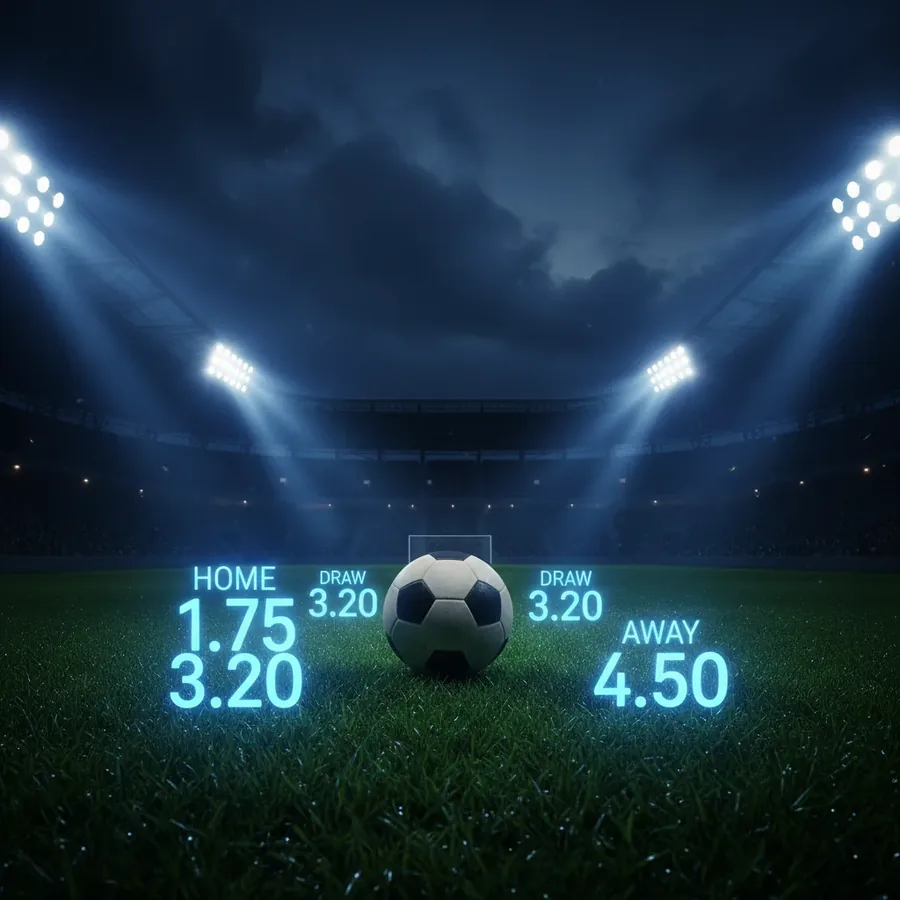
What Does +150 Mean in Decimal Odds?
The American Moneyline format uses +150 to indicate that a 100 unit stake wins 150 units, excluding the original capital returned. Converting this to decimal odds requires adding one to the ratio, resulting in a multiplier of 2.50 for calculating total returns. This method standardizes comparisons across different regional formats by expressing the full payout value directly. Players familiar with European decimals can instantly recognize 2.50 as representing a 40 percent implied probability.
Applying a 10.00 EUR stake to odds of +150 (2.50 decimal) results in a total payout of 25.00 EUR upon success. The calculation breaks down into 10.00 EUR stake plus 15.00 EUR net profit, clearly separating risk from reward. This transparent structure helps bettors understand their exact liability and potential gain before placing any wager. It eliminates ambiguity regarding whether the quoted number includes the initial investment or not.
In contrast, a favorite listed at −150 requires a larger stake to win the same 100 units profit, demonstrating the asymmetry of the system. The decimal equivalent for this negative line is 1.67, calculated by dividing 100 by 150 and adding one to the quotient. This inverse relationship ensures that both underdogs and favorites are expressed as multipliers greater than one in decimal form. Understanding this conversion prevents miscalculations when switching between American and European betting interfaces.
Convert 2.50 Odds to 40 Percent
Decimal odds of 2.50 represent a total payout multiplier where the stake is included in the final return amount. To derive the implied probability, divide one by the decimal figure, yielding 0.40 or exactly 40 percent chance. This mathematical operation reveals the bookmaker's assessment of the event's likelihood based on the offered price. It serves as a fundamental tool for identifying value by comparing this percentage against actual statistical frequencies.
The calculation 1 ÷ 2.50 = 0.40 establishes the baseline expectation for the market maker's margin and expected loss. If the actual frequency of the outcome exceeds 40 percent, the bet offers positive expected value for the punter. Conversely, if the real-world probability is lower, the wager carries a negative expectation over the long term. This metric allows for objective evaluation independent of emotional bias or team loyalty influencing decision-making.
Comparing this to a favorite priced at 1.67 decimal reveals a much higher implied probability of approximately 59.88 percent. The difference in percentages highlights the risk-reward tradeoff inherent in every betting market selection. Lower odds correspond to higher probabilities and smaller profits, while higher odds reflect lower chances and greater potential gains. This inverse correlation is constant across all decimal odds formats used in international sports betting.
Calculate 1X2 Market Margin Yourself
Football matches feature over 200 markets for top games, with a standard 4–7 % margin in the 1X2 segment before kickoff. This range expands to 6–9 % during live play, reflecting the dynamic odds adjustments required by real-time events. Bettors can calculate the implied probability by summing the inverse of each outcome's decimal odds to verify the bookmaker's edge against these specific figures.
Tennis ATP and WTA matches offer between 120 and 200 markets, carrying a tighter 3–6 % margin for the outright winner market. Satz- und Spielwetten (set and game bets) increase this margin to 6–8 %, providing a higher payout potential for precise predictions. Comparing these percentages helps users understand the cost difference between selecting a match winner versus predicting exact set scores.
Table tennis generates 20–40 markets per match, primarily focusing on set and point betting with a margin of 6–10 %. Live betting often pushes this margin above 10 %, significantly reducing the theoretical return compared to pre-match wagers. Analyzing these variance levels allows players to identify value opportunities where the bookmaker's cut is lower than the average sportsbook offering.
Rugby Main Market 5-8% vs Try Scorers 8-11%
Rugby matches in major leagues provide 60–120 markets per game, with the main market carrying a 5–8 % house edge. This baseline margin offers a relatively efficient pricing structure for standard win or handicap predictions compared to more exotic options. Players seeking consistent returns should prioritize these core markets over speculative bets that carry significantly higher costs.
Try scorer markets in rugby exhibit a wider margin ranging from 8–11 %, reflecting the increased difficulty of predicting specific player actions. This higher cost reduces the expected value for bettors who frequently target individual player achievements rather than team outcomes. The price difference highlights the premium placed on specialized knowledge within the rugby betting ecosystem.
Comparing the 5–8 % main market against the 8–11 % try scorer margin reveals a significant cost variance of up to 3 percentage points. This gap impacts long-term profitability, as higher margins directly reduce the potential return on investment for successful predictions. Savvy bettors often avoid high-margin niche markets unless they possess a distinct informational advantage over the bookmaker.
Sports, markets and margins in the betting offer
| Sport | Markets per Match | Margin | Live Betting | Highlight |
|---|---|---|---|---|
| MMA | 30–60 Märkte pro Kampf, je nach Kartenposition | 5–8 % im Siegermarkt, 8–12 % bei Siegmethode | ja | Siegmethode und Rundenwetten sehr beliebt |
| Tischtennis | 20–40 Märkte pro Match, meist Satz- und Punktewetten | 6–10 %, live häufig über 10 % | instant | Täglich hunderte Matches, stark live-lastig |
| Volleyball | 40–80 Märkte pro Match der Top-Ligen | 5–8 % im Siegermarkt, 8–11 % bei Satzergebnissen | ja | Satzwetten und Punkte-Totals dominieren |
| E-Sport (CS2, Dota 2, LoL) | 40–120 Märkte pro Match bei großen Turnieren, 10–25 bei kleinen Events | 4–7 % bei CS2-Top-Turnieren, 6–10 % bei Dota 2 und Nebenmärkten | ja | Map-Handicaps und Runden-Totals zentral |
| Eishockey | 80–150 Märkte pro NHL- oder DEL-Spiel | 4–7 % im Hauptmarkt, 7–10 % bei Perioden-Wetten | ja | Drei-Weg-Markt nur in regulärer Spielzeit |
| Tennis | 120–200 Märkte bei ATP/WTA-Matches, 30–60 bei Challenger-Turnieren | 3–6 % im Siegermarkt, 6–8 % bei Satz- und Spielwetten | ja | Zwei-Weg-Markt ohne Unentschieden |
| Formel 1 | 60–120 Märkte pro Rennwochenende inklusive Qualifying | 3–5 % bei Fahrer-Duellen, 12–20 % bei Outrights auf den Rennsieger | ja | Duelle günstiger als Langzeitwetten |
| Cricket | 80–150 Märkte pro Match, weniger bei T20-Ligen zweiter Reihe | 5–9 % im Siegermarkt, 8–12 % bei Spielerwetten | ja | Marge hängt stark vom Format ab |
| Rugby | 60–120 Märkte pro Spiel der großen Ligen | 5–8 % im Hauptmarkt, 8–11 % bei Versuchsschützen | ja | Handicap wichtiger als reine Siegwette |
Ice Hockey: 80 to 150 Markets Per Game
Basketball matches see 150–250 markets including player props, suggesting hockey offers a similarly deep market for dedicated fans. This density allows for diverse betting strategies beyond simple moneyline selections.
Basketball handicaps and totals carry a low 3–5 % margin, whereas moneyline bets rise to 4–6 %. If hockey follows this pattern, its main markets likely remain competitive, encouraging volume betting on spreads rather than straight wins. Understanding these margin differences helps bettors optimize their stake distribution across different market types.
The comparison between basketball's 3–5 % handicap margin and its 4–6 % moneyline margin illustrates the value of structured betting. Ice hockey enthusiasts should apply similar logic, favoring handicaps where the bookmaker's edge is minimized. This approach maximizes potential returns by targeting markets with the most favorable statistical edges.
Set Up System 2 out of 3 Correctly
A system 2 out of 3 bet distributes a 10,00 EUR stake across three two-team combinations at 3,33 EUR each. This structure ensures a payout even if one selection fails, provided two tips are correct. The total stake remains fixed while the risk is diversified across multiple independent outcomes.
If two selections win at 2,00 odds, only one combination pays out, resulting in a 13,33 EUR return. This calculation demonstrates how partial success still yields profit despite the initial investment loss on the third leg. The system protects capital by converting a potential full loss into a smaller gain.
Comparing this to a standard accumulator, the system 2/3 offers lower maximum returns but higher probability of any payout. While a single 2,00 odd bet might lose entirely, the system guarantees a return if half the picks are right. This trade-off suits conservative bettors prioritizing consistency over high-risk jackpots.
Quarter lines split the stake in half
Live betting updates odds every second, with an acceptance delay of 1–12 seconds typical for the industry. Football delays often reach 8 seconds, allowing prices to shift significantly between order placement and confirmation. This latency requires rapid decision-making to secure desired values before the line moves.
The margin in live football markets increases by 1–3 percentage points, often reaching 6–10 % compared to pre-match rates. This surge reflects the bookmaker's added risk from real-time volatility and the shortened time horizon for settlement. Bettors must weigh the convenience of live action against the reduced mathematical expectation.
Part-cash-out functions allow users to withdraw 50 % of a 20,00 EUR value, securing approximately 9,00–9,50 EUR immediately. The remaining 5,00 EUR continues at 3,00 odds, preserving upside potential while locking in partial profit. This tool manages risk effectively during volatile live sessions.
Rugby: 60 to 120 Markets Per Game
Rugby matches offer between 60 and 120 markets per game in major leagues, providing a broad scope for strategic betting. This volume exceeds the 30–60 markets available for MMA fights, allowing for more granular analysis of team performance metrics. Consequently, bettors can construct complex accumulators with higher potential payouts without sacrificing market liquidity. However, niche lower-tier competitions may fall below this 60-market threshold.
The house edge in rugby main markets typically ranges from 5% to 8%, which is slightly higher than the 3–5% margin found in basketball handicap bets. This premium reflects the increased difficulty of predicting outcomes in a sport with frequent score fluctuations and weather dependencies. Therefore, a 10 EUR stake on an odds selection of 2.00 yields a 20 EUR payout, but the expected value is reduced by the vig. Sharp money often targets the lower end of this margin range for better long-term profitability.
Specific side markets such as try scorers carry a margin of 8% to 11%, significantly widening the gap compared to the 5–8% edge in winner markets. This disparity means that while accumulator boosts might improve returns, the underlying mathematical expectation remains negative due to the high vig on prop bets. A punter selecting three try scorers at 4.00 each faces a combined margin that drastically reduces their total return on investment. Thus, sticking to core markets like point spreads offers a statistically superior path for sustained bankroll management.
Contact
Live - online chat
Banking









Providers












Spinit Casino 2026